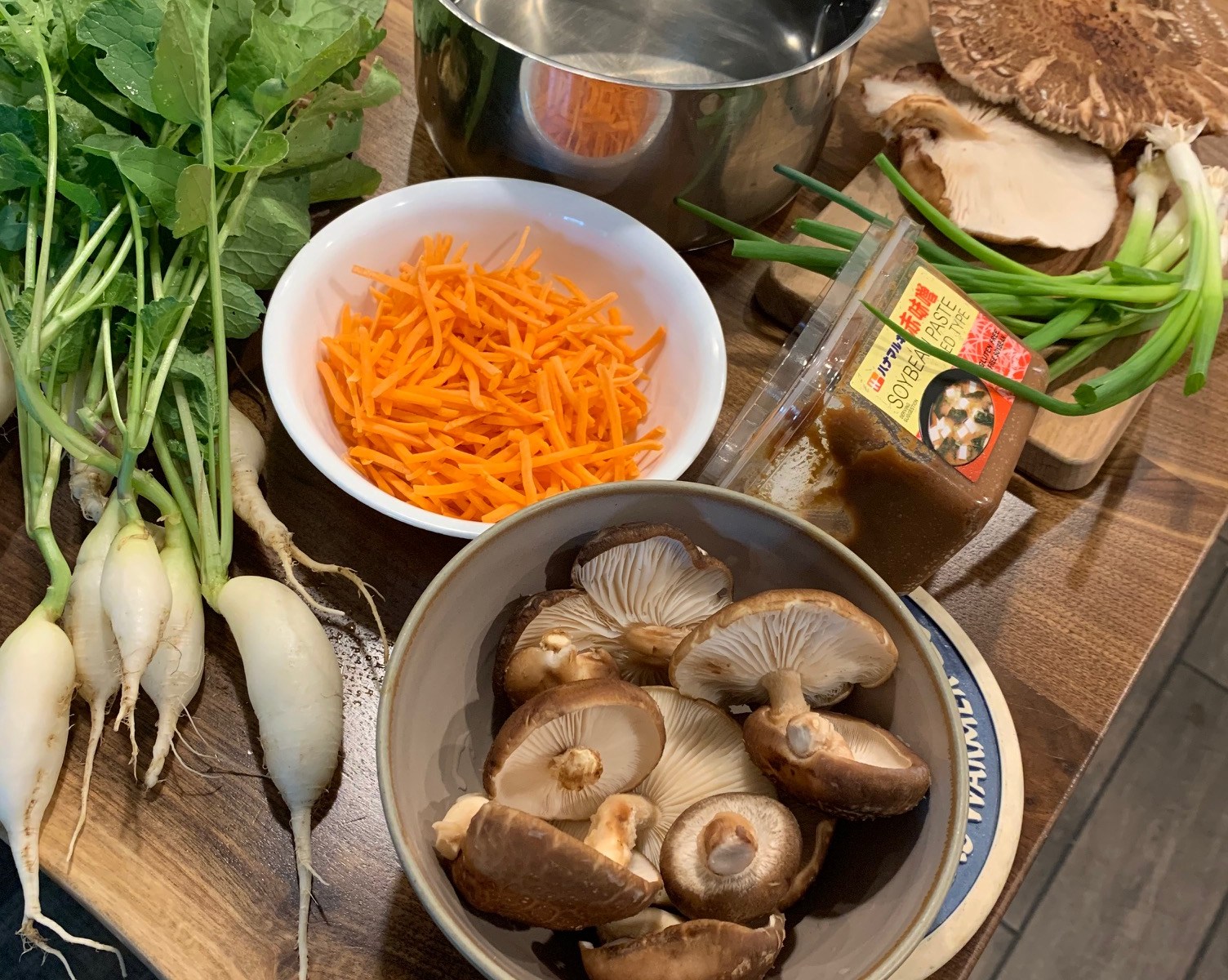
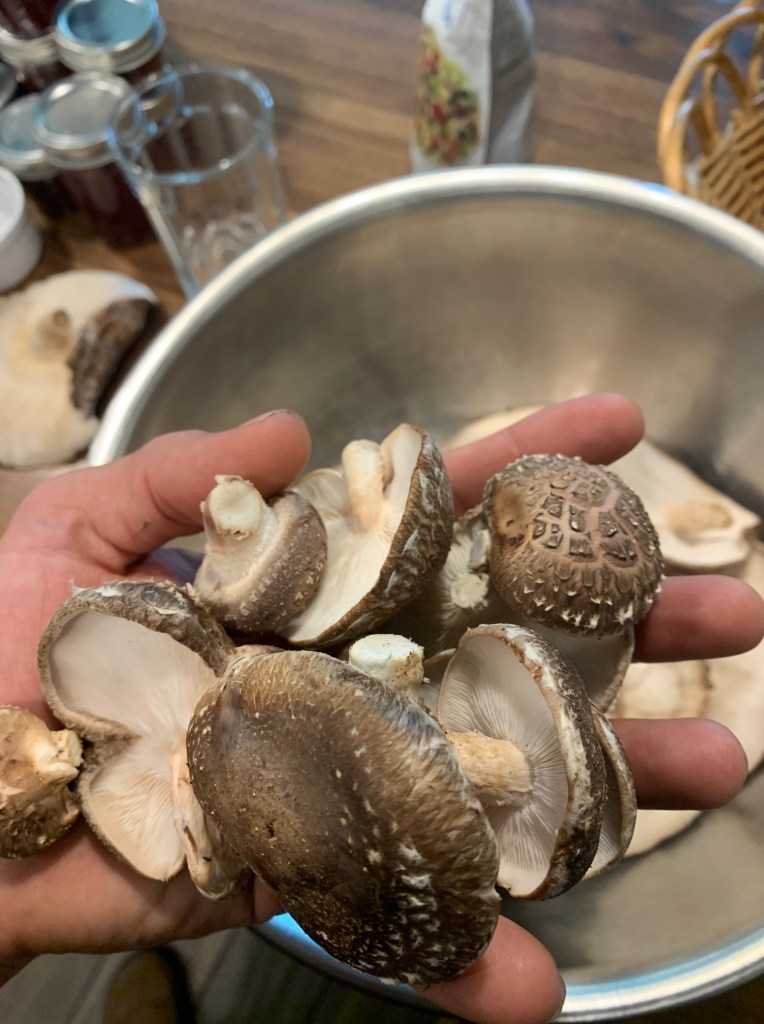
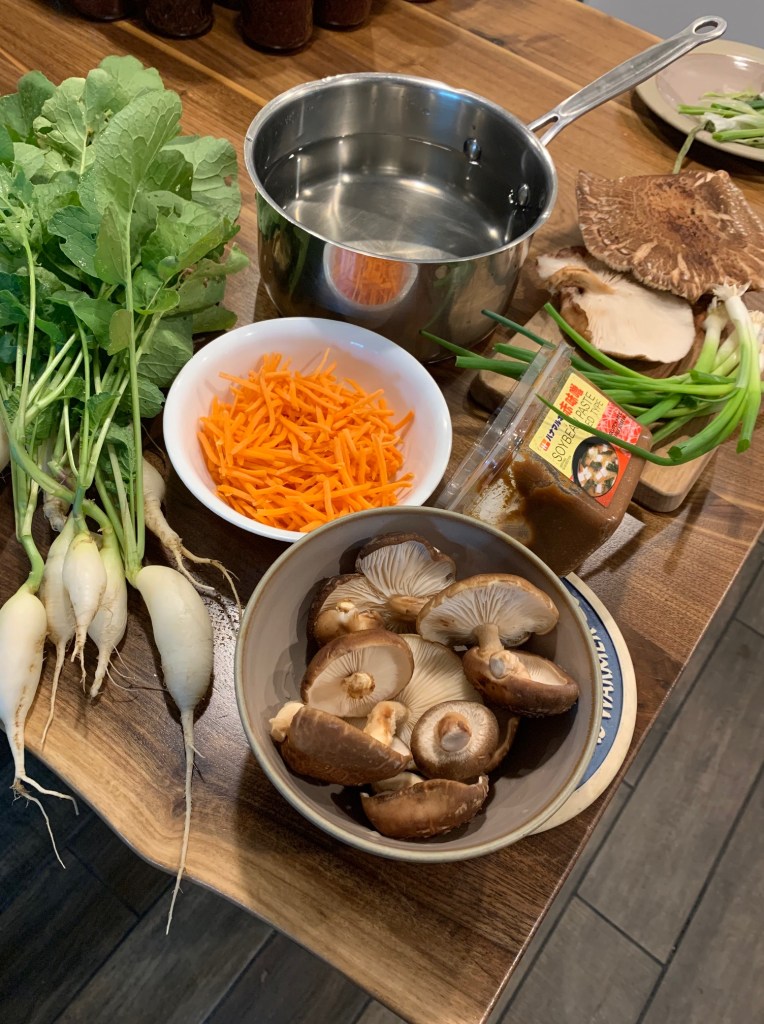
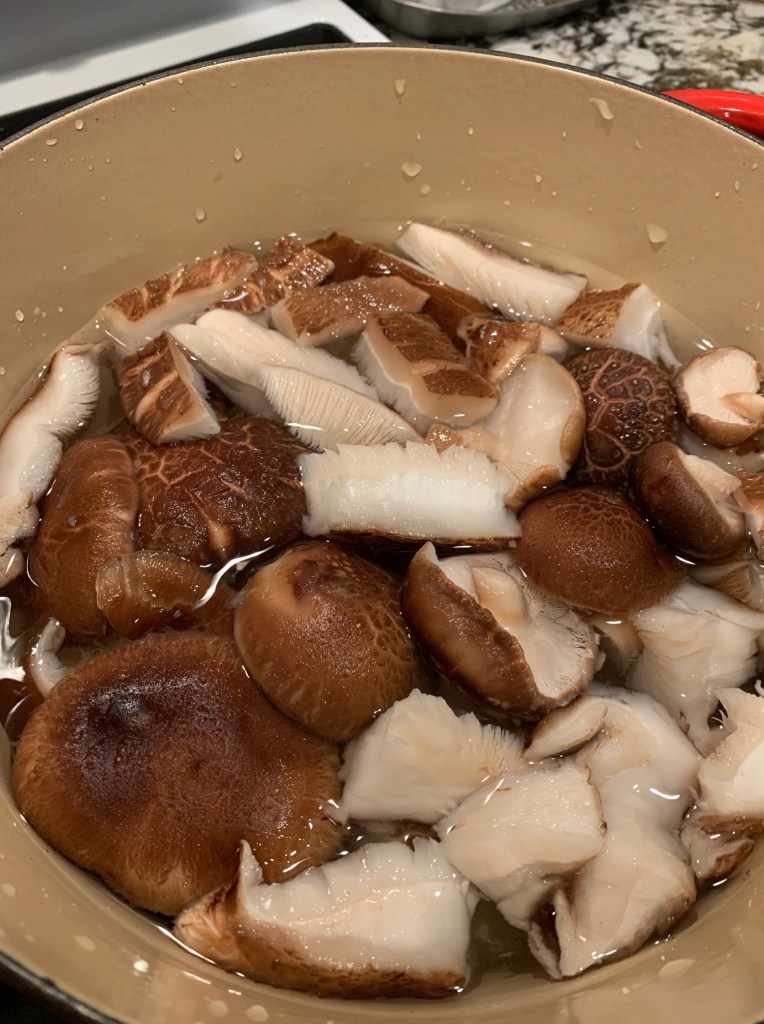
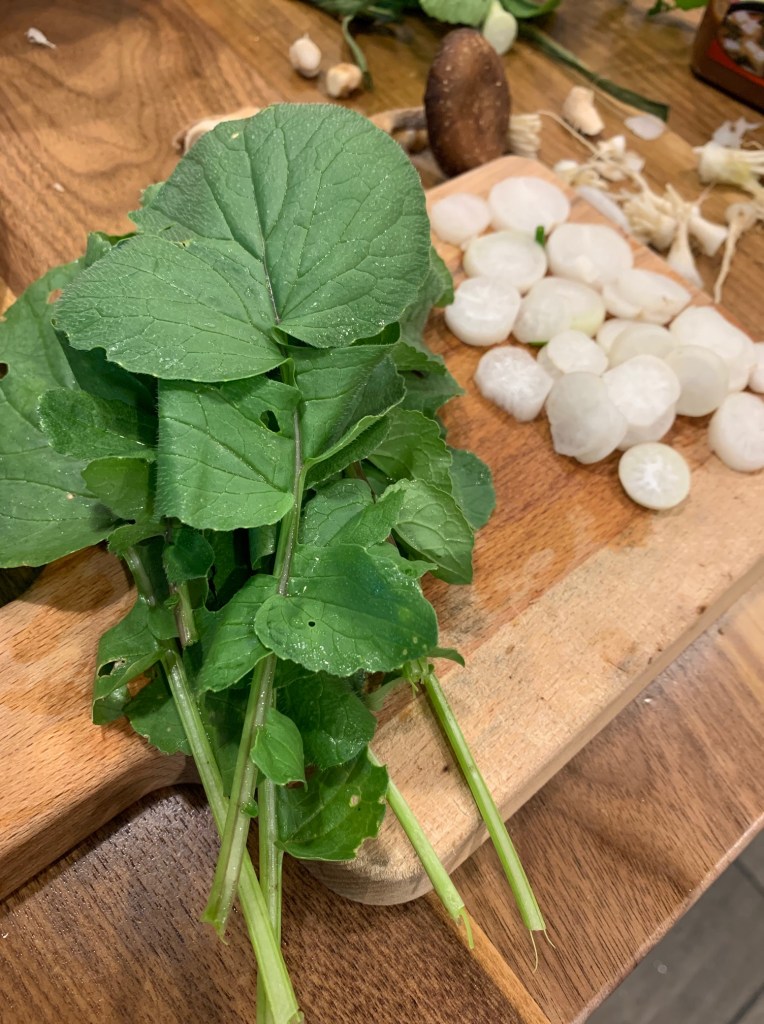
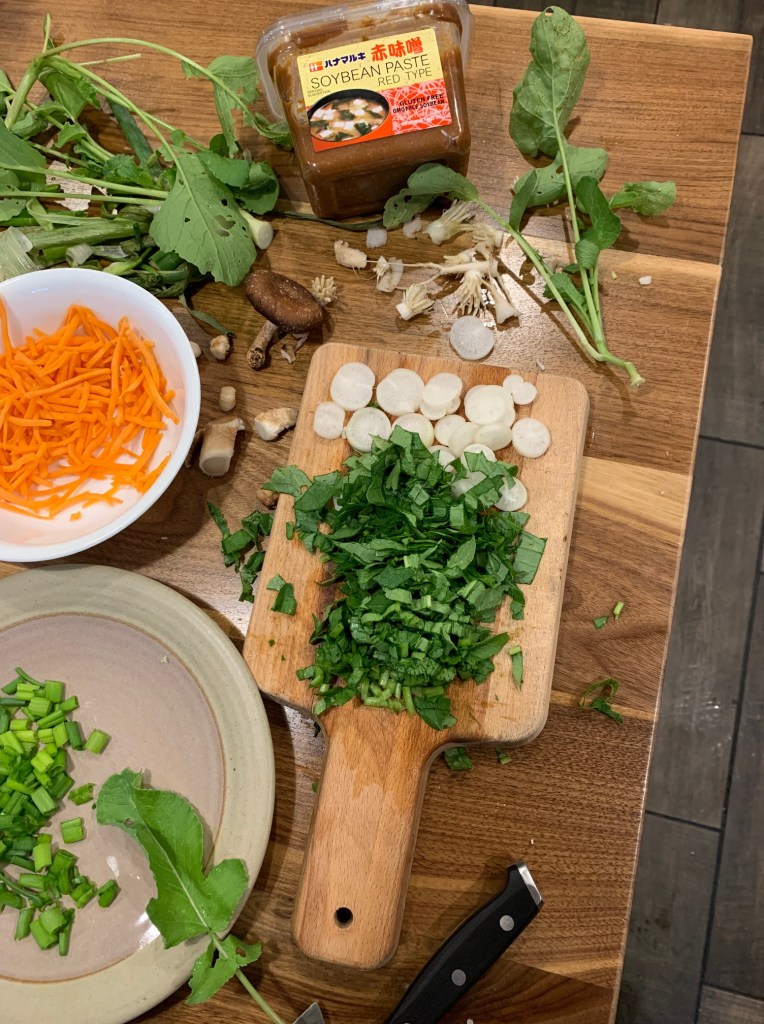
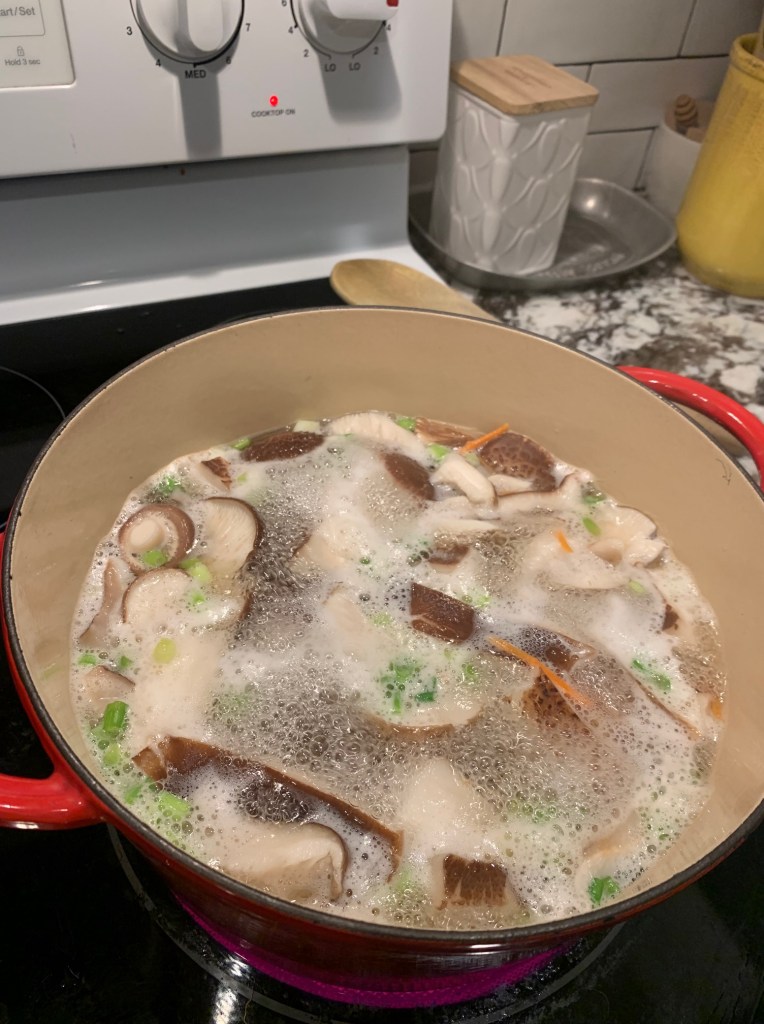
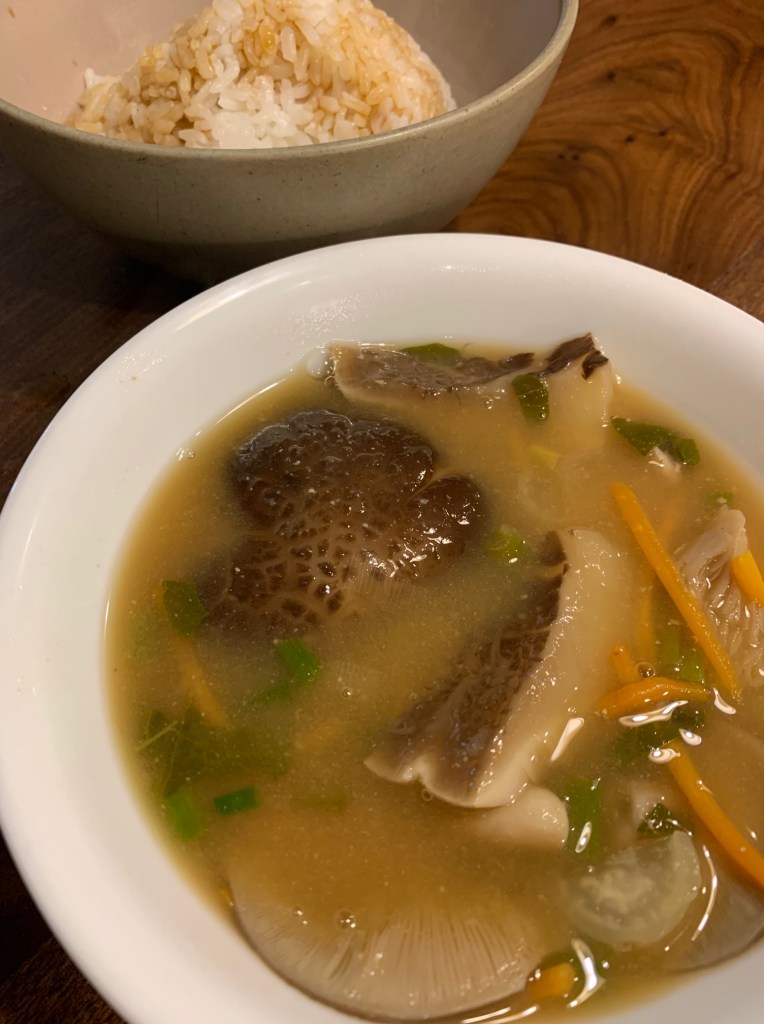
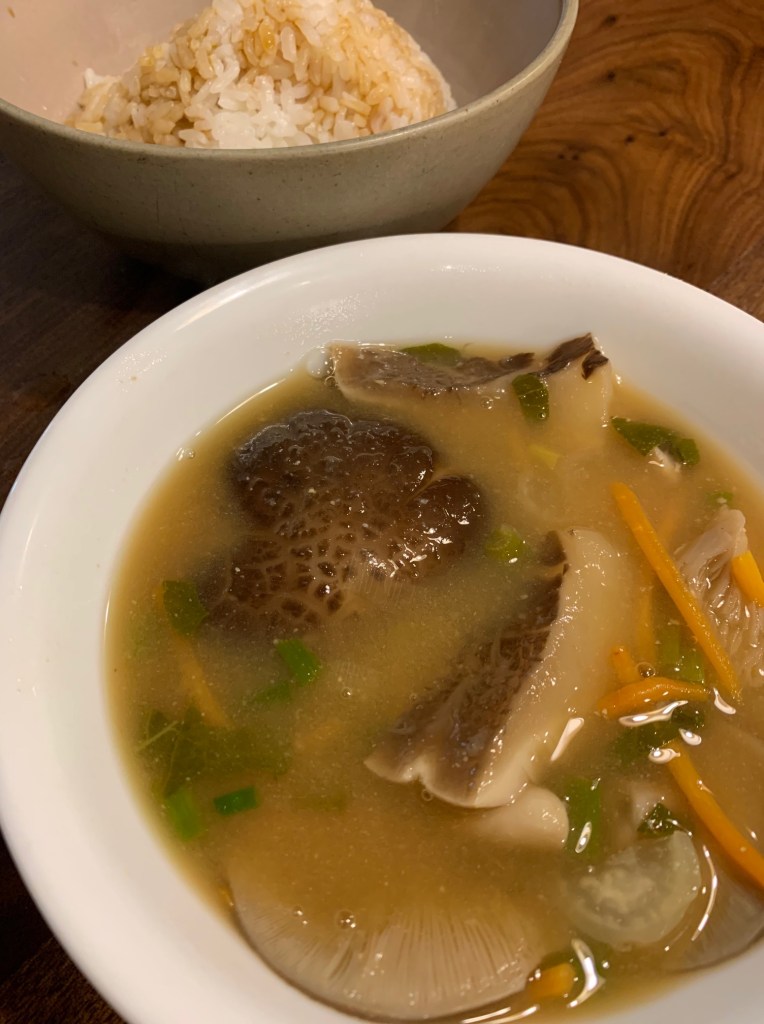
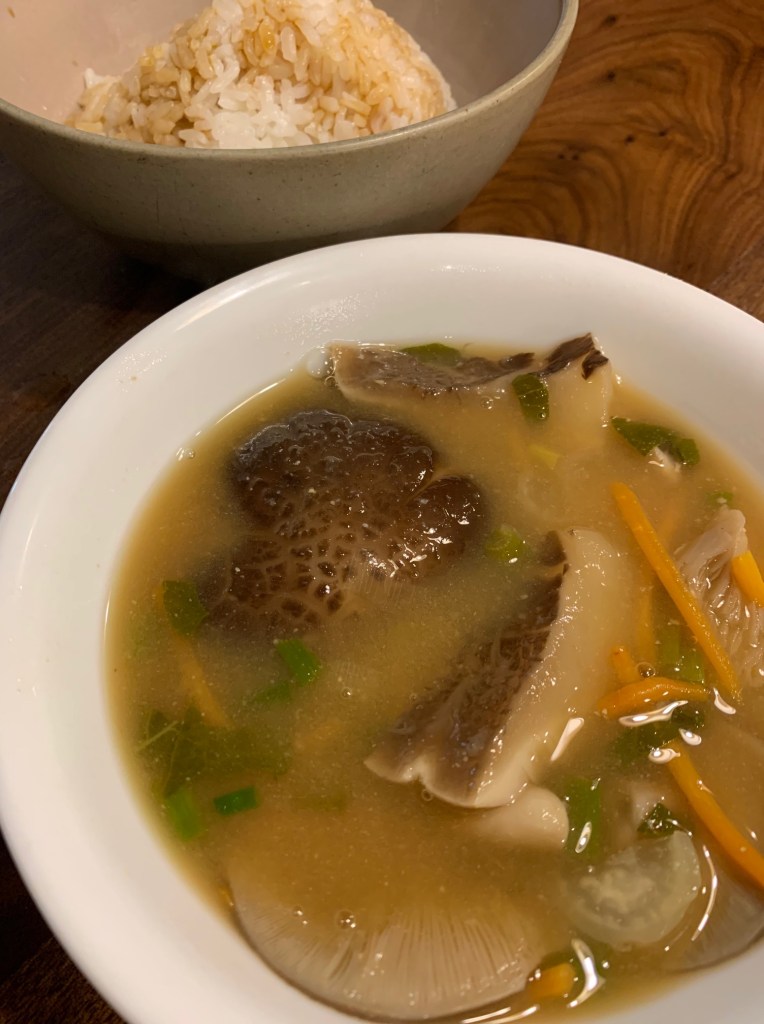
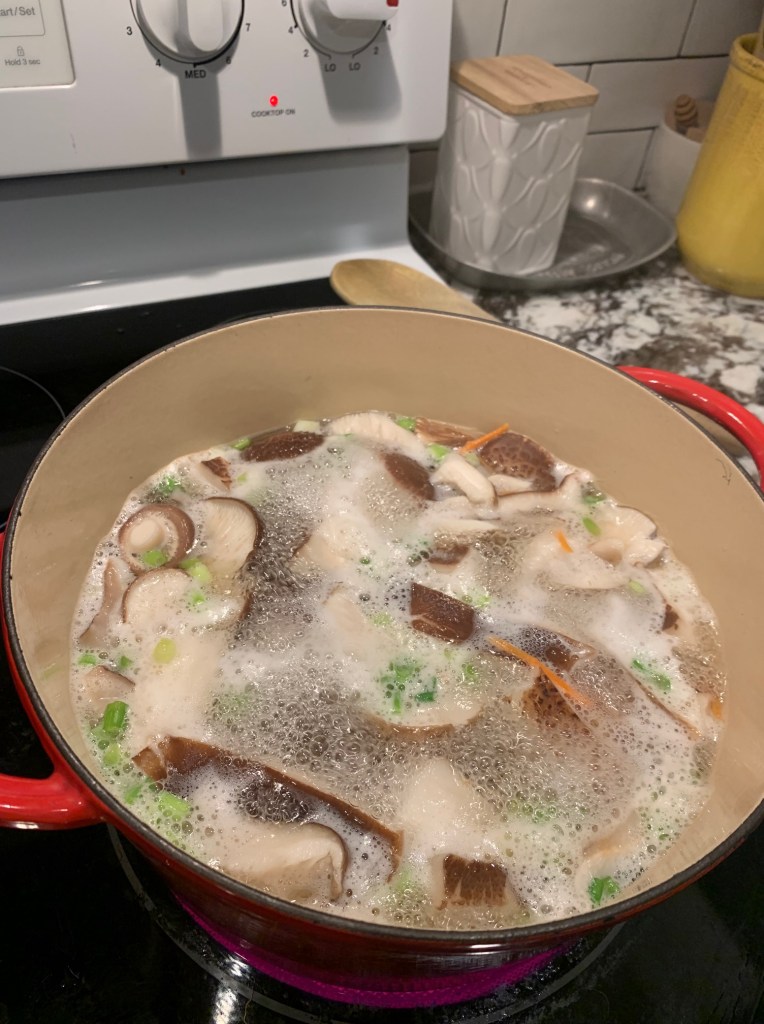
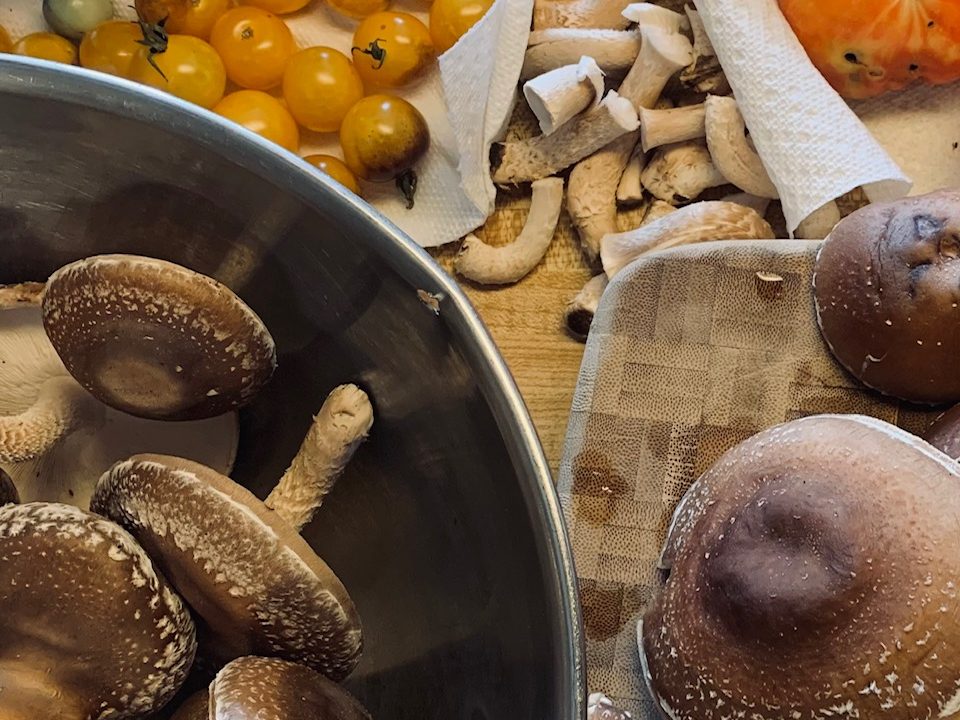
Shiitake mushrooms are by far one of my favorite things to throw in a miso soup. Miso can be found in any Asian food store. It is simply fermented soybean paste. Added to a soup, miso makes a fine broth that perfectly marries a few simple garden vegetables with just about anything you have in the fridge.
As a Dad, I’m a fan of these types of recipes. Stews. Stir-fries. Soups. Curry. Take what you got and throw it in there.
If anyone is interested in booking a Sunday night miso soup delivery in the Conway, Arkansas area, sign up is below:
One Bowl of Shiitake-Miso Soup
One Bowl of shiitake-miso soup delivered right to your door to following Sunday evening. We’ll email you the delivery details.
Out with the old and in with the new. What do you do with old mushroom logs?
Spent mushroom logs make great garden bed borders. Used correctly, they can keep weeds out and good soil in. Old logs can also hold moisture and nutrients for the soil over a long period of time.
Selecting Spent Logs
Depending upon what kind of wood was used, Shiitake logs can continue to produce mushrooms for up to five years. Once the mushrooms have used most of the log’s nutrients available to them, the log feels light and soft. Other second level decomposers can begin to move in along with the termites and beetles.
It is a good idea to remove these infested (biodiverse) logs from the stack. But what to do with them?
What To Do With Spent Logs
Some shiitake operations further north heat their greenhouses at night with woodfire stoves burning old, spent mushroom logs.
Usually, Arkansas winters are not so cold. This year we lost our heat in a blizzard and I almost had to start burning shiitake logs to stay warm. Luckily, our wood stores held out.
This year marks the fifth year since we’ve started inoculating our own mushroom logs every February. I was more focused on planting a garden than inoculating mushroom logs. Natural weed barriers are needed in my yard. Bermuda grass. Enough said. Maybe some old logs would do to keep the weeds out and my soil in.
I had lots of logs to choose from . Wanting to keep the newer logs clean, I selected lighter logs with the bark falling off.
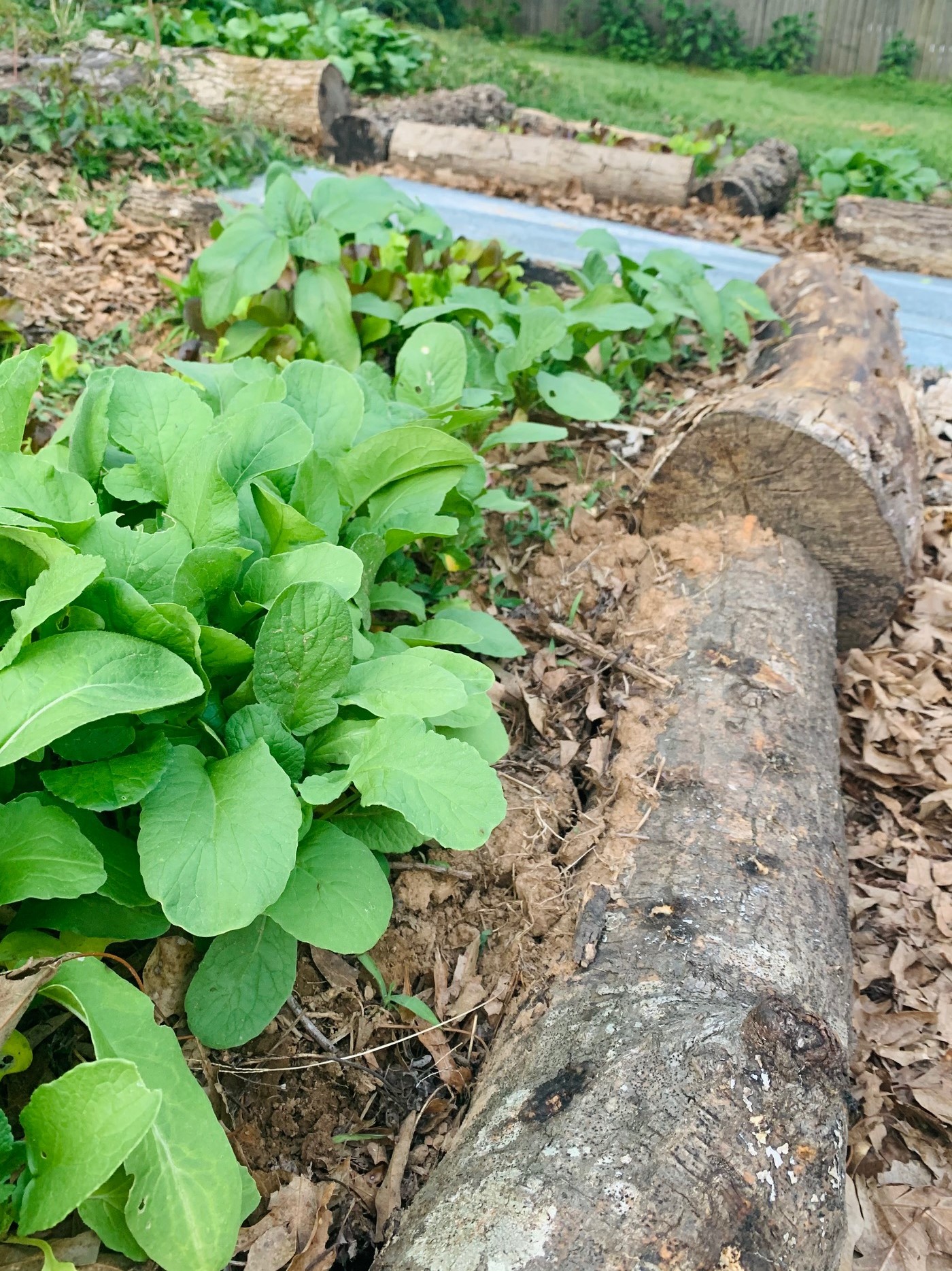
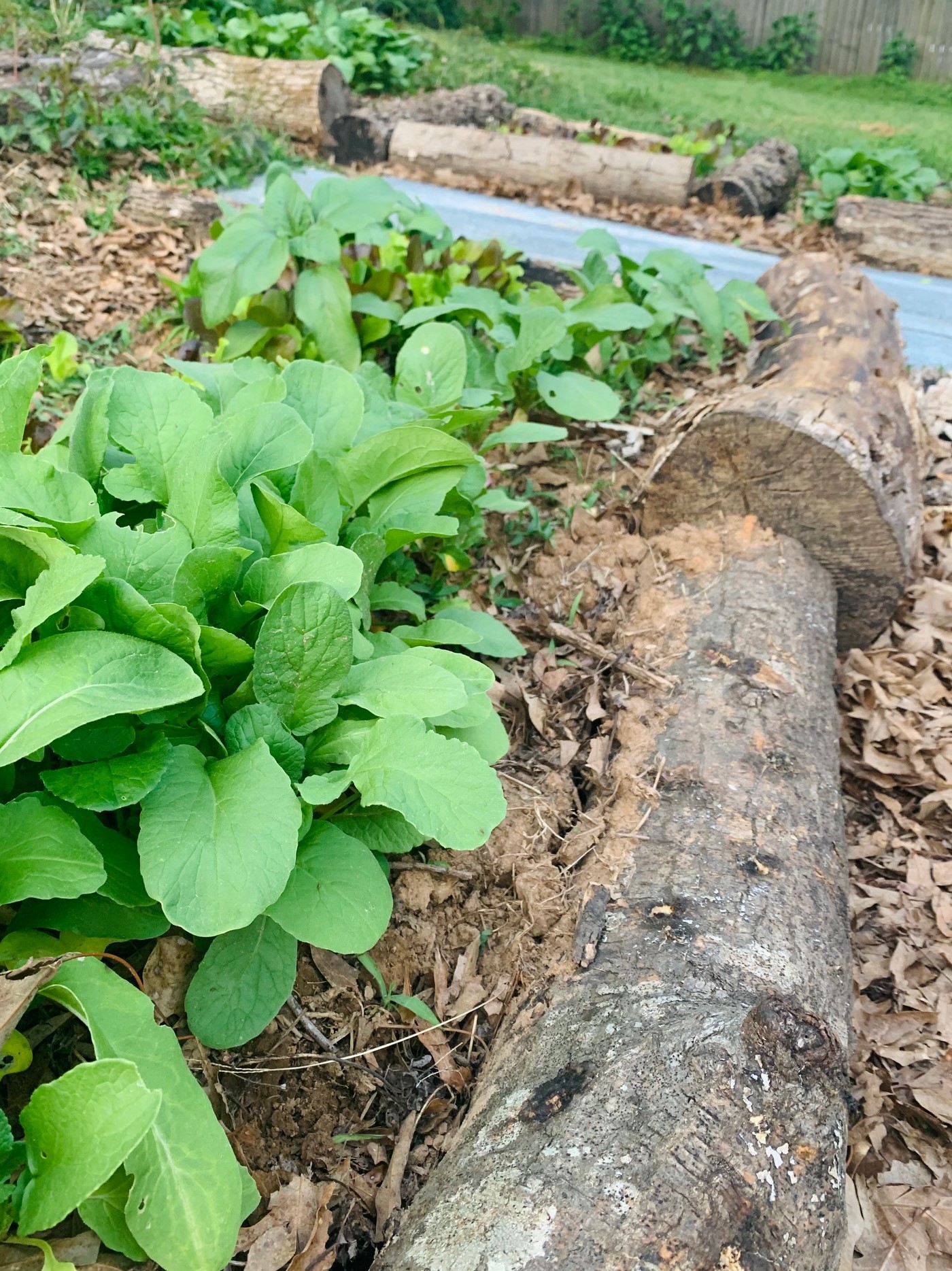
These old logs are the perfect backyard resource to shape up one side of my little garden beds. Hopefully the wood will provide enough support to keep the soil from washing away. The spring rains will test this.
A Few Weeks Later
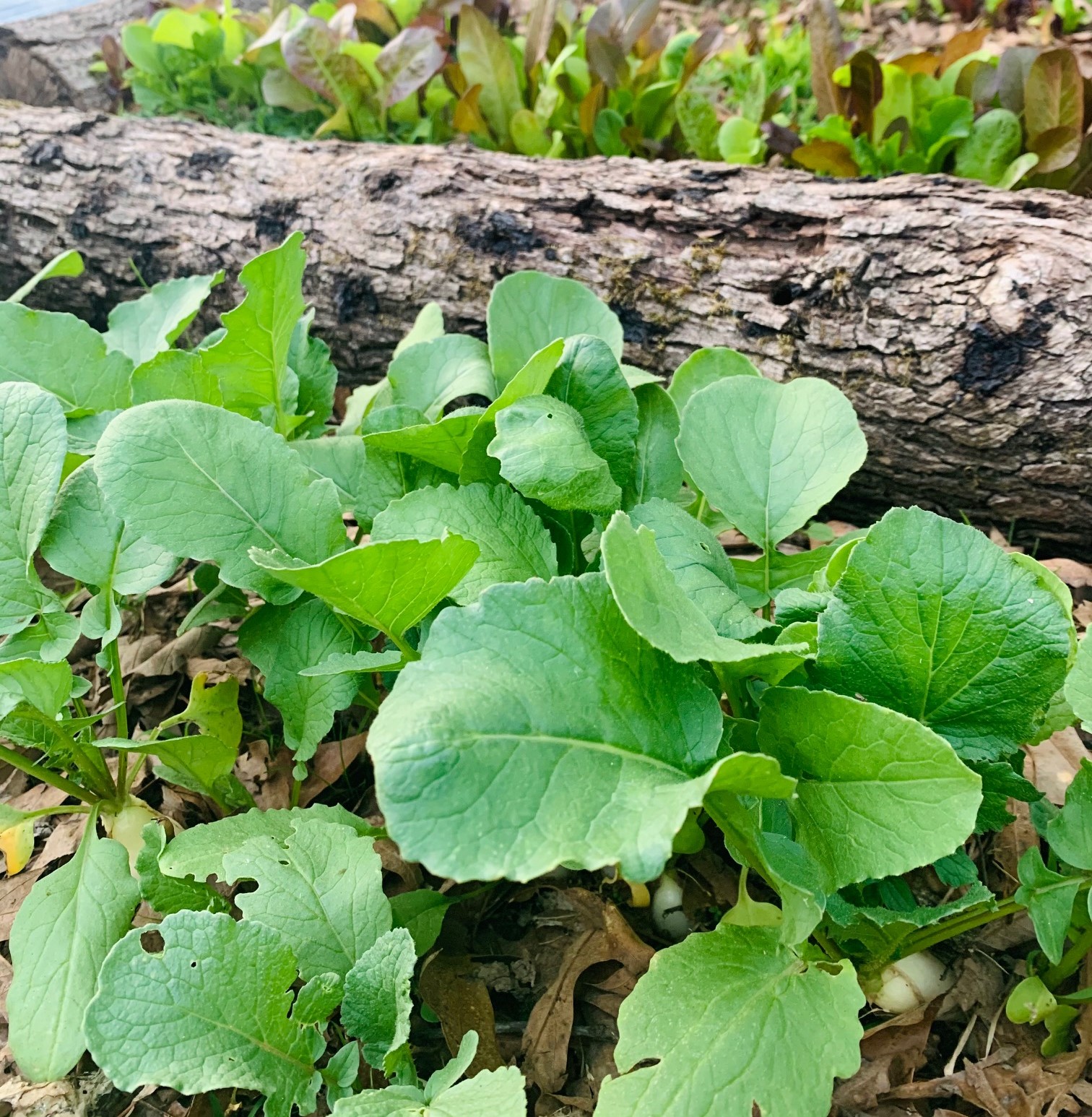
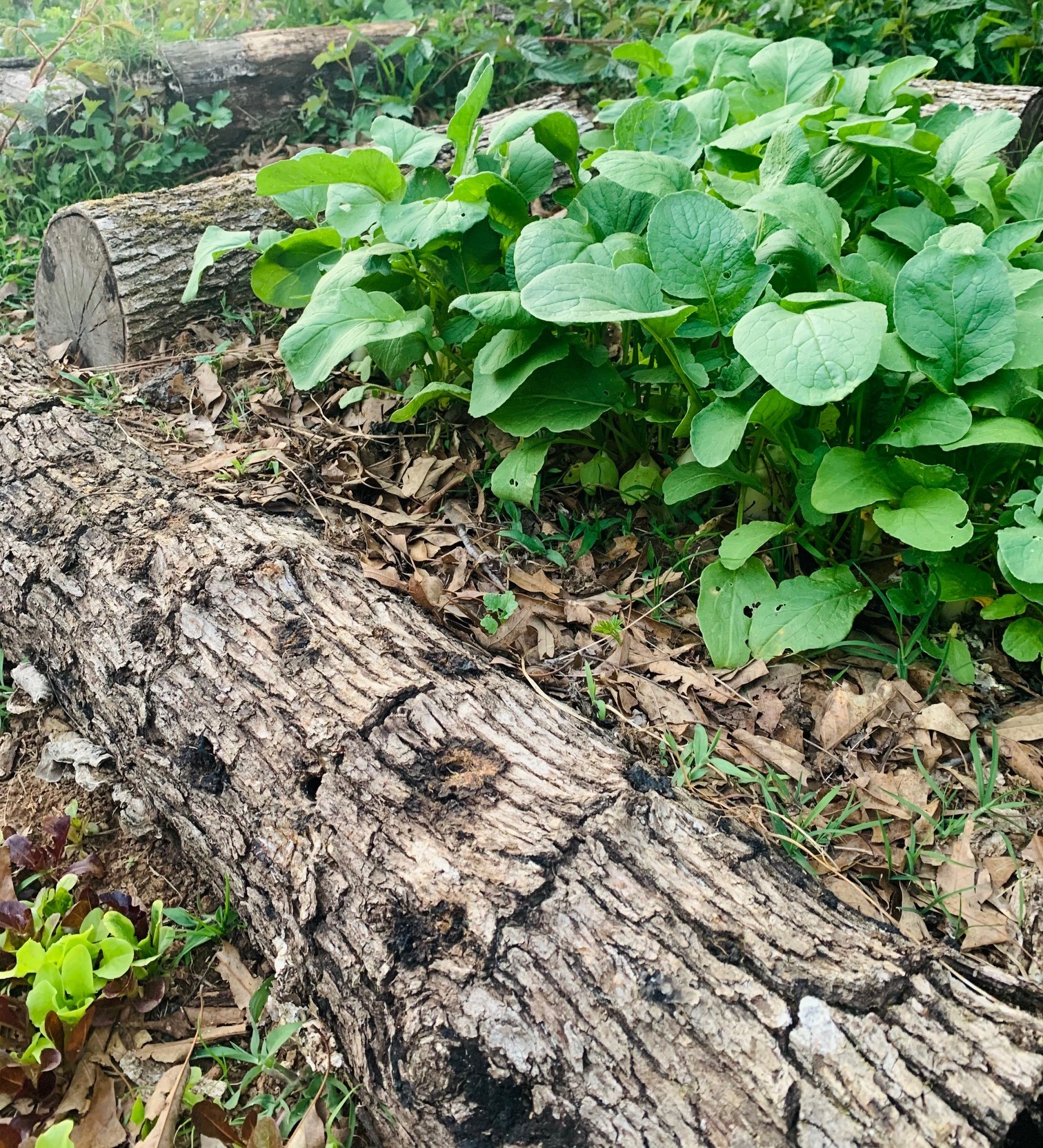
We have radishes and lettuce leafing out over these logs, no mushrooms yet but the conditions aren’t quite right. I hope the remaining mycelium will love the added moisture. They are partially covered by soil, leaf mulch, and radish leaves. Plus they are sure to be watered every other day.
You can start and complete mushroom log inoculation in two or three weeks. Ideally you start the process at a time of the year when several mild months of weather are sure to follow. In order for the mycelium to easily grow and take root in the oak logs during the first few months, the temperature cannot be too hot or too extremely cold.
The best times to cut and inoculate your logs is early spring or early fall.
Log Selection and Preparation
The perfect shiitake log:
fresh-cut oak log
free of disease or rot
Diameter 3″ – 8″
Length 2.5′ – 3′
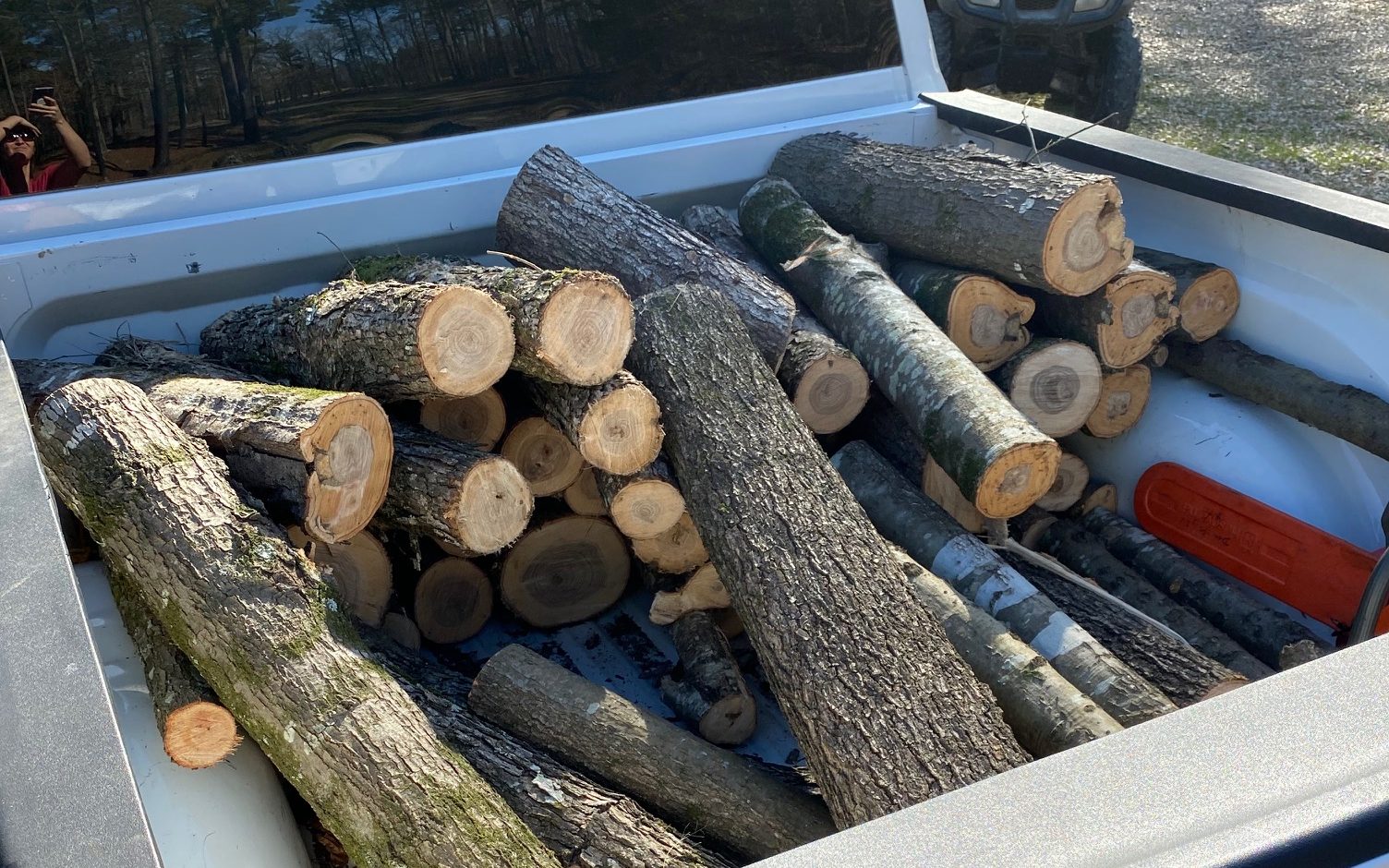
When selecting and cutting your shiitake logs, it is good to keep a few things in mind.
Don’t go to big. You will be lifting and moving these logs several times throughout the process. Cut a log that is too thick or too long and you could be causing yourself some backache in the future.
Don’t go to small. Smaller logs don’t yield as many mushrooms over the course of their lifetime. They may also dry out faster endangering the success of your inoculation.
Water or soak the logs the day before you are going to drill and inoculate.
Drill
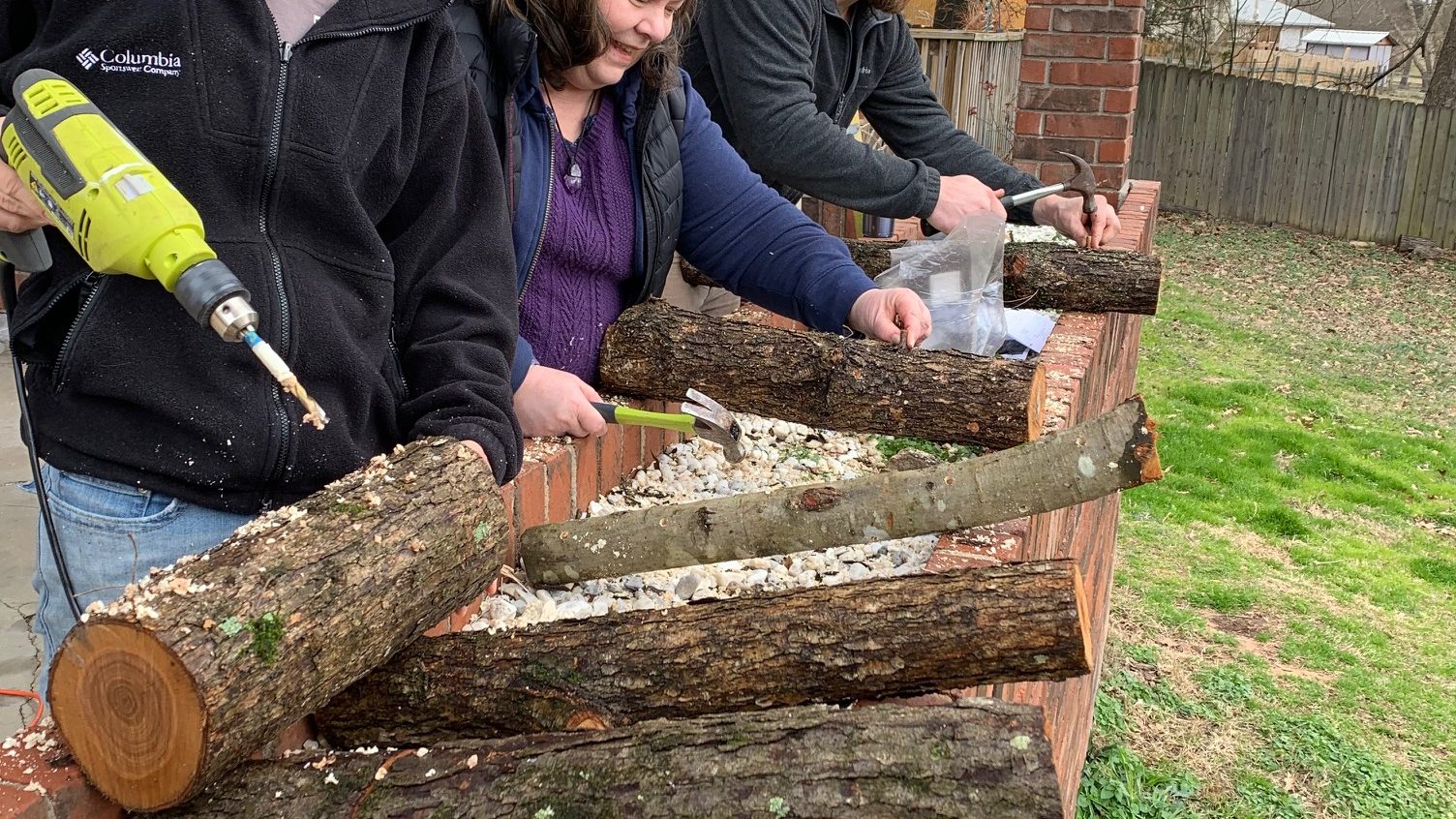
Drill holes that are exactly 1″ deep. Drill them evenly all the way around the log, with each hole being generally 4-6″ apart from the next. A diamond pattern is best.
Plug
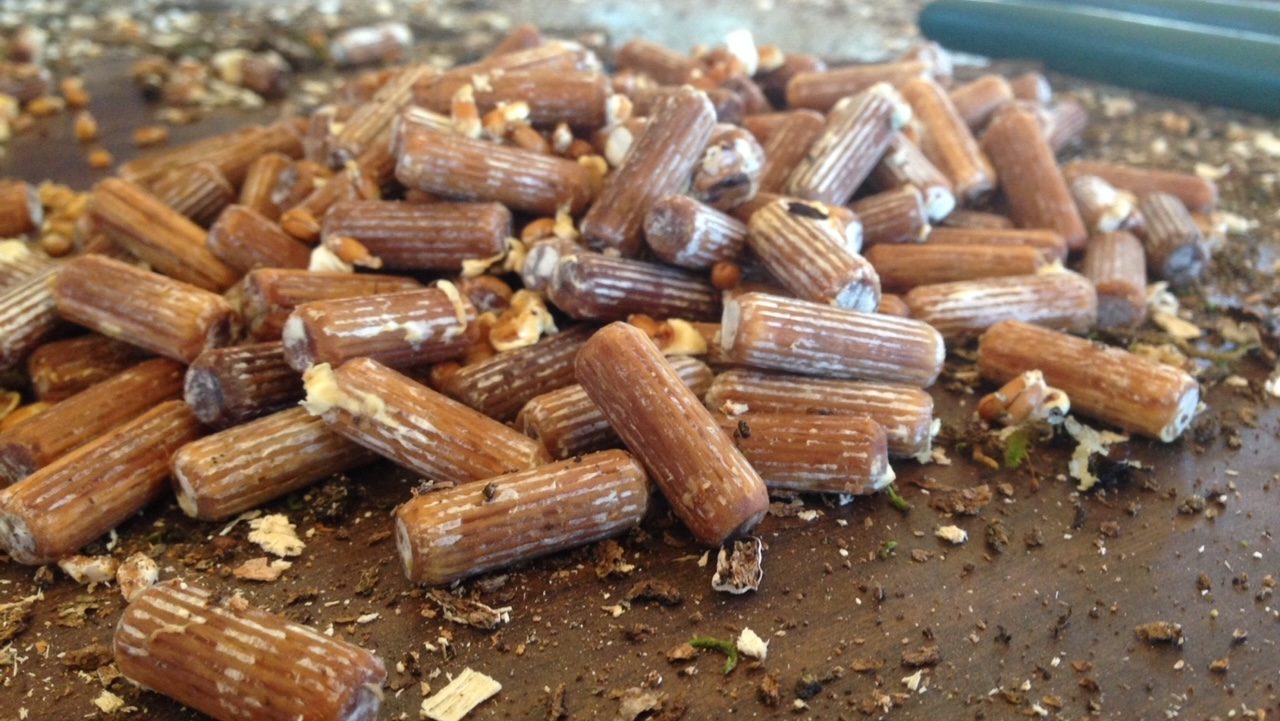
Take your plug spawn or sawdust spawn out of the fridge and get to plugging. If using plugs, you want to be sure to hammer them all the way into the log. If using the sawdust, you want to be sure to fill the hole completely. Take care that all the holes are filled.
Wax
Use melted wax to seal the outside of each inoculation site. This keeps moisture in the log for the delicate mycelium. The wax also keeps competitor fungi from taking hold on the exposed wood.
9-Month Care Plan
Consider a few key elements for your care plan:
positioning
water
shade/sun
humidity/wind exposure
Stack your logs off the bare ground. The best style of positioning will depend upon the climate of your region. In a dry climate, stacking a log horizontally will preserve moisture inside. In rainy or humid conditions tilting logs upright is preferred. This prevents excess moisture from building up inside the wood, causing rot.
For the first two months, it is very important that you water the logs at least once or twice a week. The delicate mycelium inside the logs cannot survive going completely, especially when it is first starting out.
For the next 6 or 7 months all you really need to do is ensure that the logs get less than 3 hours of direct sun a day – so generally kept in a very shady area.
If a couple of weeks go by without any rain showers, it is a good idea to get out and water your logs generously. They can survive a little dry weather but not much. Think of the mycelium growing inside as a small plant that will wilt and dry if allowed to go too long without water.
Fruiting
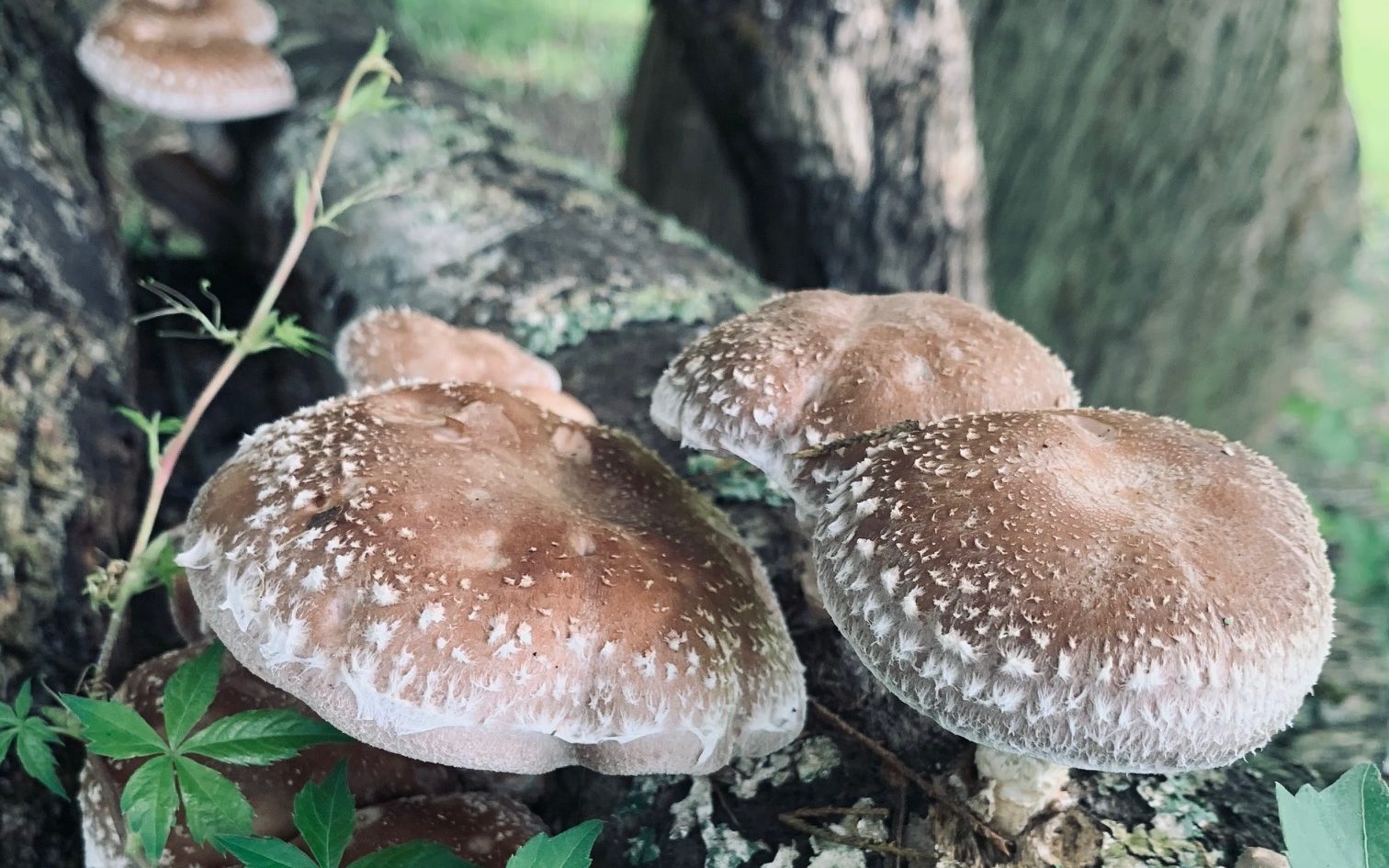
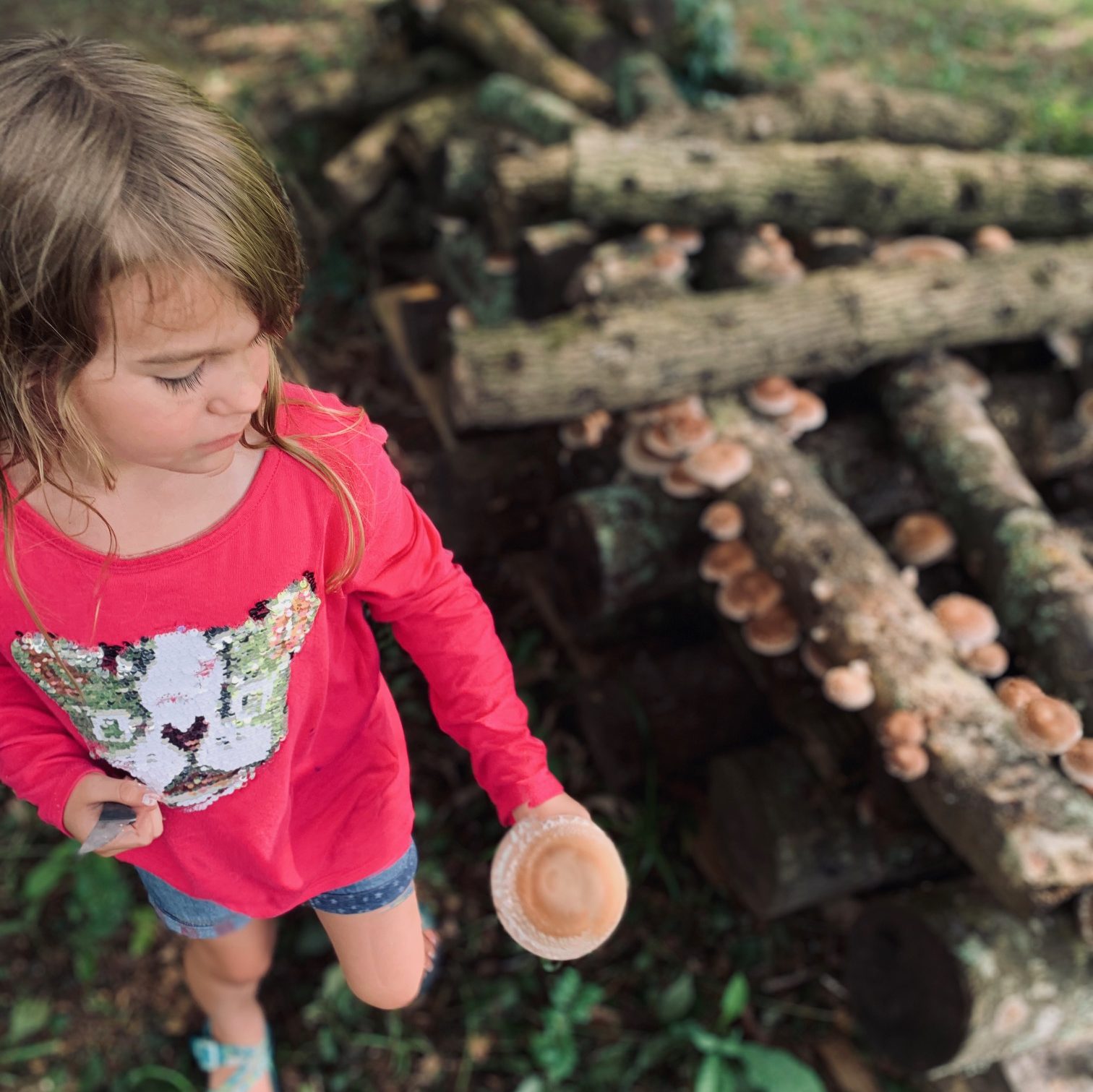
When the temperature and humidity level sits just right for a few days, you will see your first few mushrooms. This is an indicator that the log is ready to fruit. All it needs is a good solid soaking and with the right ambient temperature to get the process going.
The right temperature depends upon the specific strain of shiitake you are growing. Generally the ideal temperature ranges from 50 to 80 degrees F.
Harvest
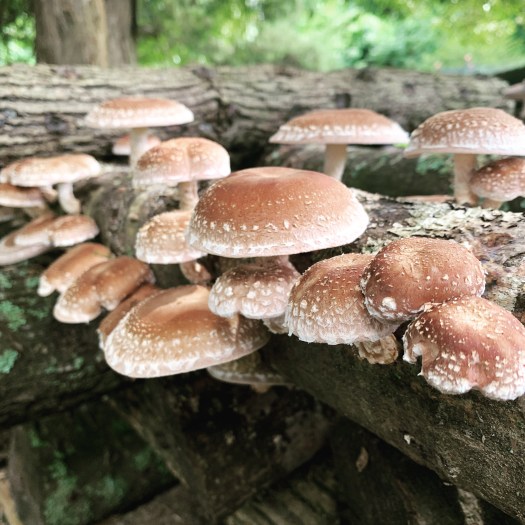
Mushrooms are at peak flavor and most ideal texture when the cap is almost completely unrolled and expanded. Use a sharp knife to cut the stem right next to the log’s bark.
What’s Next?
In the next few articles we will dig deeper into each phase of the process. The process itself is simple but at each step there are a few small decisions to make that can have a big impact on the success of your endeavor. We’ll walk you through each step of the process starting with the tools you need.
Follow or subscribe to this blog to receive the latest article.
Out with the old and in with the new. What do you do with old mushroom logs?
Spent mushroom logs make great garden bed borders. Used correctly, they can keep weeds out and good soil in. Old logs can hold moisture and nutrients for the soil over a long period of time.
Depending upon what kind of wood was used, Shiitake logs can continue to produce mushrooms for up to five years. Once the mushrooms have used most of the log’s nutrients available to them, the log feels light and soft. Other second level decomposers can begin to move in along with the termites and beetles.
It is a good idea to remove these infested (biodiverse) logs from the area. But what to do with them?
Some shiitake operations further north heat their greenhouses at night with woodfire stoves burning old, spent mushroom logs.
Usually, Arkansas winters are not so cold. Though this year, we almost ran out of firewood at the wrong time. I would’ve had to burn a few shiitake logs if my wife, Jenny, had not saved the day.
This year marks the fifth year since we’ve started inoculating our own mushroom logs every February. I was more focused on planting a garden than inoculating mushroom logs. Natural weed barriers are needed in my yard. Bermuda grass. Enough said. Maybe some old logs would do to keep the weeds out and my soil in.
I had lots of logs to choose from . Wanting to keep the newer logs clean, I selected lighter logs with the bark falling off.
These old logs are the perfect backyard resource to shape up one side of my little garden beds. Hopefully the wood will provide enough support to keep the soil from washing away. The spring rains will test this.
In my head, a few weeks down the road, we’ve got radishes and lettuce leafing out over these logs, flushing out a final mushroom or two. I hope the remaining mycelium will love the added moisture they get being partially covered by soil, leaf mulch, and radish leaf.
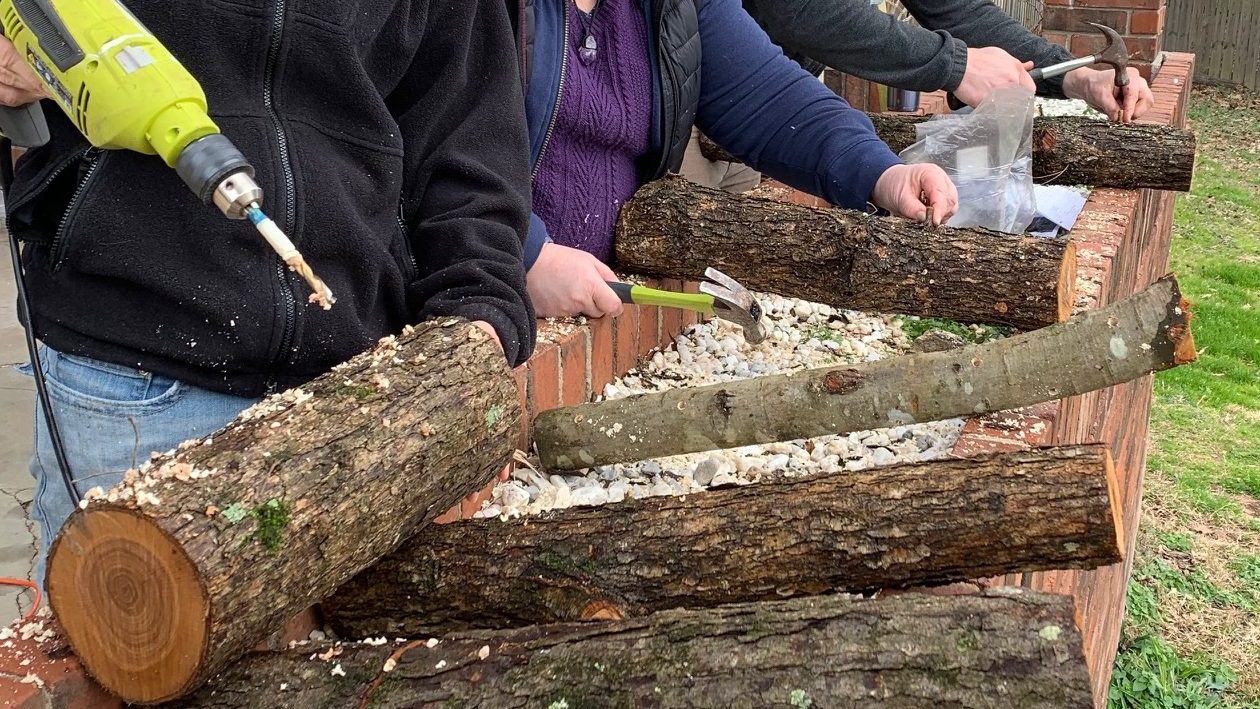
Drilling inoculation sites and hammering home the plug spawn.
Timing can make or break some crops. Luckily for us, Shiitake is a fairly forgiving fungi. Shiitake spawn grow best in mild temperatures. In the south, anytime in the spring or fall will do. Still, there are some rules of thumb to keep in mind to help your success rate.
The best time to cut your logs will be just before the sap starts running in the spring time. I’m talking about the last couple of cold weeks in February. Valentienes day is a great time to start fixing up the chainsaw.
In these coldest of winter months, the tree builds up sugar content in the sap. Mycelium will use the sugars as an abundant nutrient source to colonize the entire log quickly, before competitor fungi can move in.
Before I inoculate the logs, I wait 10 to 14 days. This allows time for the cell structures in the wood to begin to break down. The mushroom spawn takes much better to wood at this stage.
While everyone else is sowing turnip greens, I’m sizing up oak trees.
I grew up in central Arkansas. Crown jewel of southern U.S. bible-belt. Fried chicken is king. Mushrooms? The gray slugs on a pizza? No, thanks. I hear they taste like shoes.
Luckily, at some point in my life I found Japan, and took a look around. They are more into mushrooms than you would think. There are seven different kinds of mushrooms commonly found in any Japanese super market. No big deal.
I found Shiitake forests, rows and rows of logs set up, unfolding beautiful of shiitake bouquets. The catch was they were supposedly full of nuclear radiation. During the meltdown of the Fukushima-Daiichi powerplant, nuclear waste radiation had blown over the region was staying in. Mushrooms, I learned, absorb heavy metals such as uranium from the environment when they grow, making them store houses for radio active poison.
Fascinated by what I could not have, I thus began to notice mushrooms everywhere, edible or not. The Japanese country side is a biodynamic jungle. Island of ancient volcanos rising out of the sea. Rain, rivers, creeks, and streams are abundant across the forested mountains. These dewy, lush and shady micro-climates are the perfect environment for so many different kinds of mushrooms.
Moving back to the southeastern U.S. I brought my love and fascination of fungi back with me. I kept tabs on many of the same mushrooms and microclimates that I had seen in Japan. I was also itching to try some of the cultivation techniques I had seen while I was there. Particularly shiitake grown on hardwood logs was of interest to me because in my home state, Arkansas, forestry is a huge industry. There are saw mills, everywhere you turn. Drive a few hours. All you’ll see are trees and all you’ll pass is log trucks.
A neighbor of mine had a few logs leaned up behind his shed.
“Doug, these are supposed to be Shiitake logs but they’ve never put off any mushrooms that I can see. I probably let them get too dry.”
I took a look around and it was indeed dry.
“I’ll look into it.”
I’m a learn by doing kind of guy. In no time I had ordered some plug spawn and was gassing up my chainsaw. There were some oak trees out back that I knew were growing too close together. One had limbs hanging over our house. I sawed the trunk down into five, arm-length sections. When the plugs came I followed the instructions and inoculated my five logs. No big deal.
The next 8 months was the real kicker. I’m sure I must’ve looked silly out back with my water hose soaking down the five logs. I named them all after reindeer and imagined me Santa. I was making a list and checking it twice. These logs were not going to go dry!
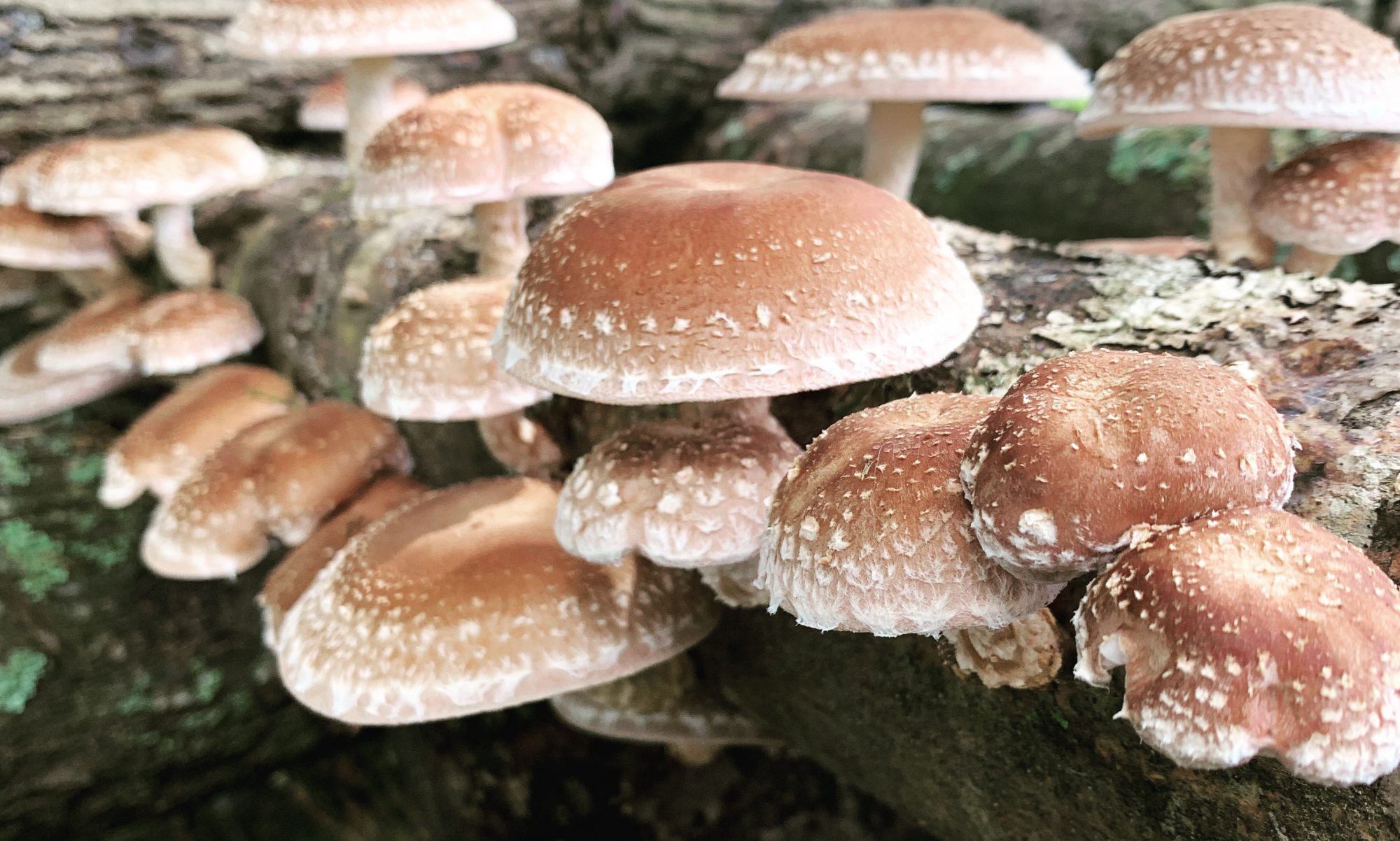
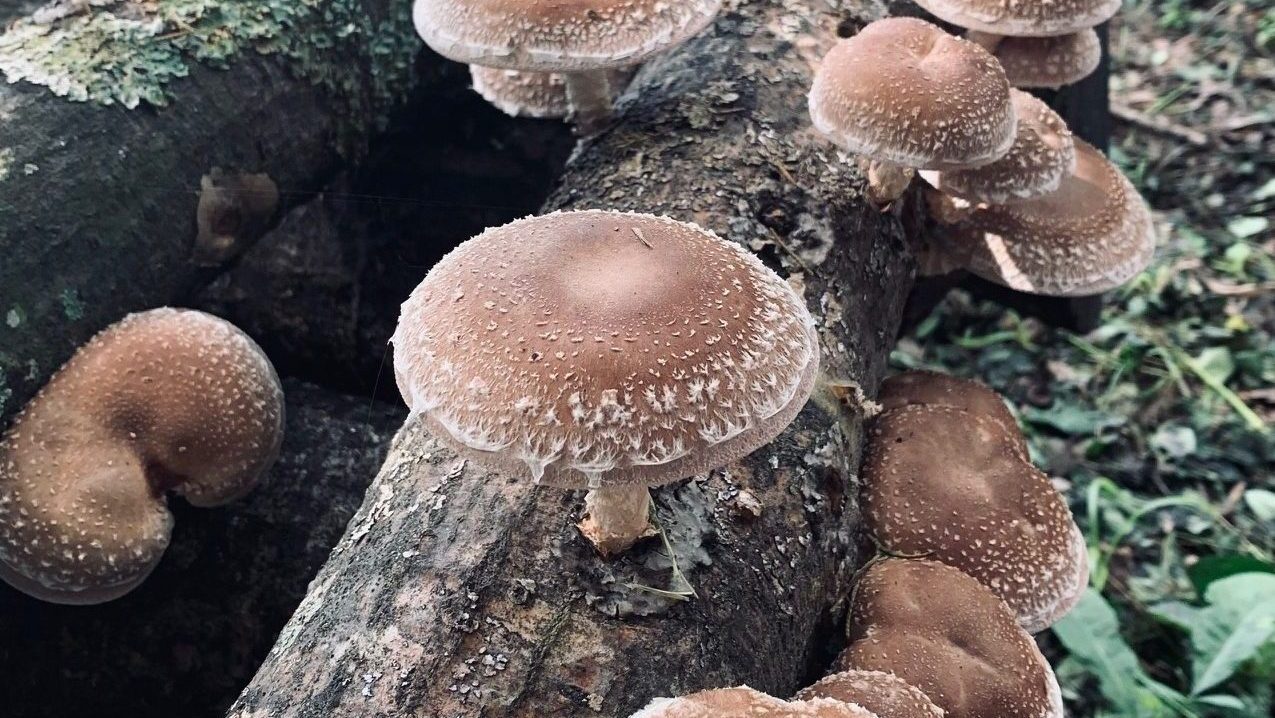
So eight months, two weeks, and three days later (same gestation period of my first born child) there grew a perfectly upright shiitake mushroom right off Prancer’s back side. I was hooked.
Since then, my family and I have grown a lot of shiitakes right here in our back yard. Every year, our wood lot grows as we innoculate more logs. The tender, woodsy taste of freshly picked shiitake is unrivaled. Same with garden tomatoes verses some from the store. Once you get hooked on the taste, the annual work of preparing and planting happens all on its own.
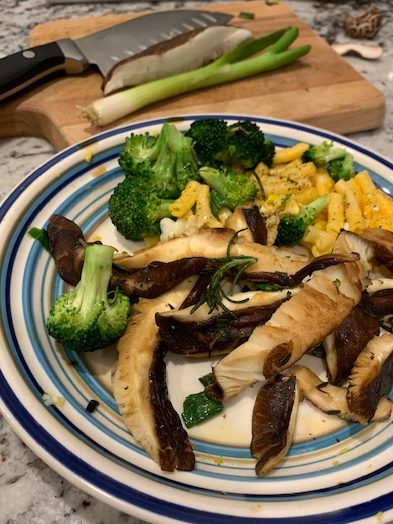
This is the very first meal that I made with my home grown shiitake.
This recipe re-imagined for my kids on a bed of macaroni and cheese.
I could not believe that I was at my own kitchen table. The combination of flavors was telling me this restaurant was a five star, but it was I who had done the cooking. It had to be that mushroom flavor coming trough.
Combined with the tangy, sweet crunch of the greens, my woodsy fungi went over perfect. Sauté with onions and there is not much that can go wrong.
4 cups turnip greens 2 cups chopped mushrooms 1 yellow onion 2 tbl olive oil salt and pepper
Warm olive oil in a skillet at medium heat.
Add onion (diced) and mushrooms (sliced) to the skillet. Cook until onions are translucent.
As the onions and mushrooms begin to brown slightly, add the greens on top. Lower heat and cook until greens tender but still have a little bit of crunch in the stem.
Sprinkle with soy sauce or salt and pepper to taste.
I like to serve this with an egg on a bed of rice. I like to eat this with chop sticks while watching the sun go down.
Just to get some ground rules in, here is a glossary of mushroom terminology I enjoy using on the regular. These words feel so dirty, in a good way.
Mycelium – These are basically the roots of the mushroom. They look like little white hairs that gradually spread throughout their nutrient source, or substrata.
Substrata – The nutrient rich substance that the mycelium grow through to get established. The mycelium waits for the right air, water, and light conditions, before it fruits, or produces its first flush of mushrooms.
Flush – One fruiting cycle. Most mycelial networks flush several times before their substrata is depleted of nutrients.
Fruiting – The tissue structure we know as the “mushroom” is the fruit of the organism. It is made to produce seeds: millions of microscopic spoors.
Spores – essentially the seed of the mushroom. Microscopic, they can sometimes be seen falling from the gills or the sponge of the mushroom as a fine smoke-like mist.
Gills – Thin layered structures underneath the cap of some mushrooms. This is where the spoors are produced and released.
Spawn – One way to cultivate mushrooms is by transplanting mycelial networks into larger sterilized substrata. The initial nutrient dense substrata that the spoors grow out on is called the spawn.
Lentinula edodes – This is the scientific name for the famously delicious species of mushroom known as Shiitake.



 Good Knight Mushrooms